2026-10-23 ·
Signs Your Spray Foam Needs Removing After a Wet Lincolnshire Winter
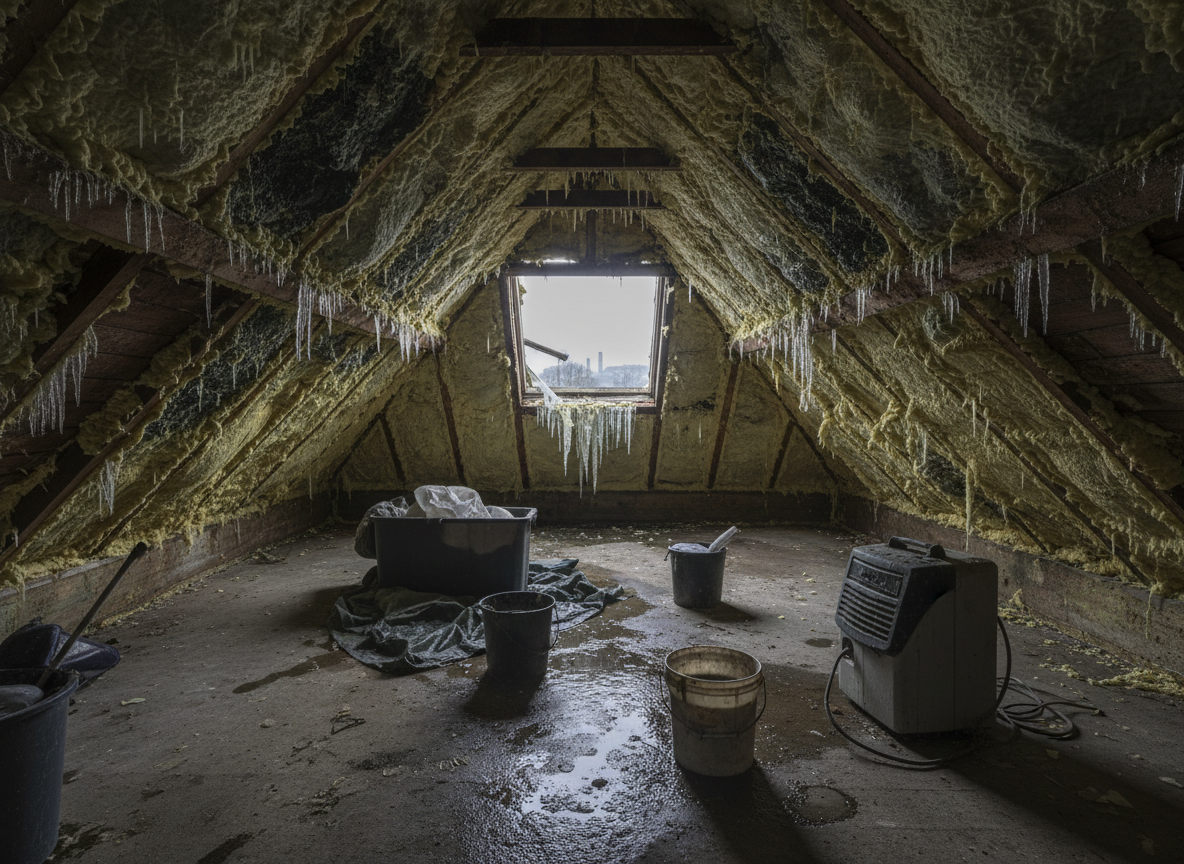
After a wet Lincolnshire winter, the clearest sign that spray foam needs removing is persistent damp patches along rafters combined with a musty odour that does not clear once temperatures rise. In Scunthorpe properties, especially those built before 1970 on the A18 corridor and in Gunness, water finds its way under closed-cell foam layers during prolonged rain, trapping moisture against timber that then begins to rot.
Moisture Damage Visible in Scunthorpe Lofts
Lincolnshire winters bring repeated freeze-thaw cycles that push water through small gaps in roof tiles. Once inside, the foam prevents normal drying, so homeowners in Messingham and Bottesford often find dark staining on the underside of felt or on original lath and plaster ceilings below. These stains appear first near the eaves where wind-driven rain hits hardest. When the staining spreads more than 300 mm from any penetration and feels soft to the touch, the foam has lost its bond and must come out before the rafters weaken further. Checking the same spots after each heavy downpour shows whether the problem is worsening.
Airflow and Condensation Changes After Winter
Another reliable indicator appears when loft ventilation feels reduced and condensation forms on the inside face of the roof covering even on mild days. In Kirton in Lindsey and Keadby homes, spray foam was often applied directly to the underside of tiles, blocking the natural air path that older roofs relied on. After several months of high humidity, you may notice water droplets reforming within hours of wiping them away. This pattern points to the foam acting as a vapour barrier that now traps household moisture rising from below. An insulation assessment can confirm whether the foam has absorbed enough water to drop its R-value and whether removal will restore proper airflow.
Structural and Odour Warnings in Local Housing
Sagging sections of foam that pull away from the rafters when gently pressed, or a persistent ammonia-like smell that intensifies on warmer days, signal advanced breakdown. These conditions show up most in 1960s semis around Althorpe and Haxey where original roof timbers already carry decades of wear. The foam itself begins to crumble into small beads that collect in the eaves, indicating the material has absorbed water and expanded then contracted repeatedly. At this stage the only remedy is full removal to prevent further timber decay. Local teams familiar with North Lincolnshire roof construction know how to strip the material without disturbing fragile original laths.
Homeowners noticing any of these changes benefit from contacting a 24/7 service based at A18 Doncaster Rd, Gunness, Scunthorpe DN15 8WA for an on-site check. Early removal prevents the need for more extensive roof repairs later. Related reading on condensation patterns and cost factors appears in the articles on condensation problems in Scunthorpe lofts after spray foam installation and what affects spray foam removal cost in North Lincolnshire. For targeted loft spray foam removal or a full insulation assessment, see the dedicated service pages covering residential properties across the region.