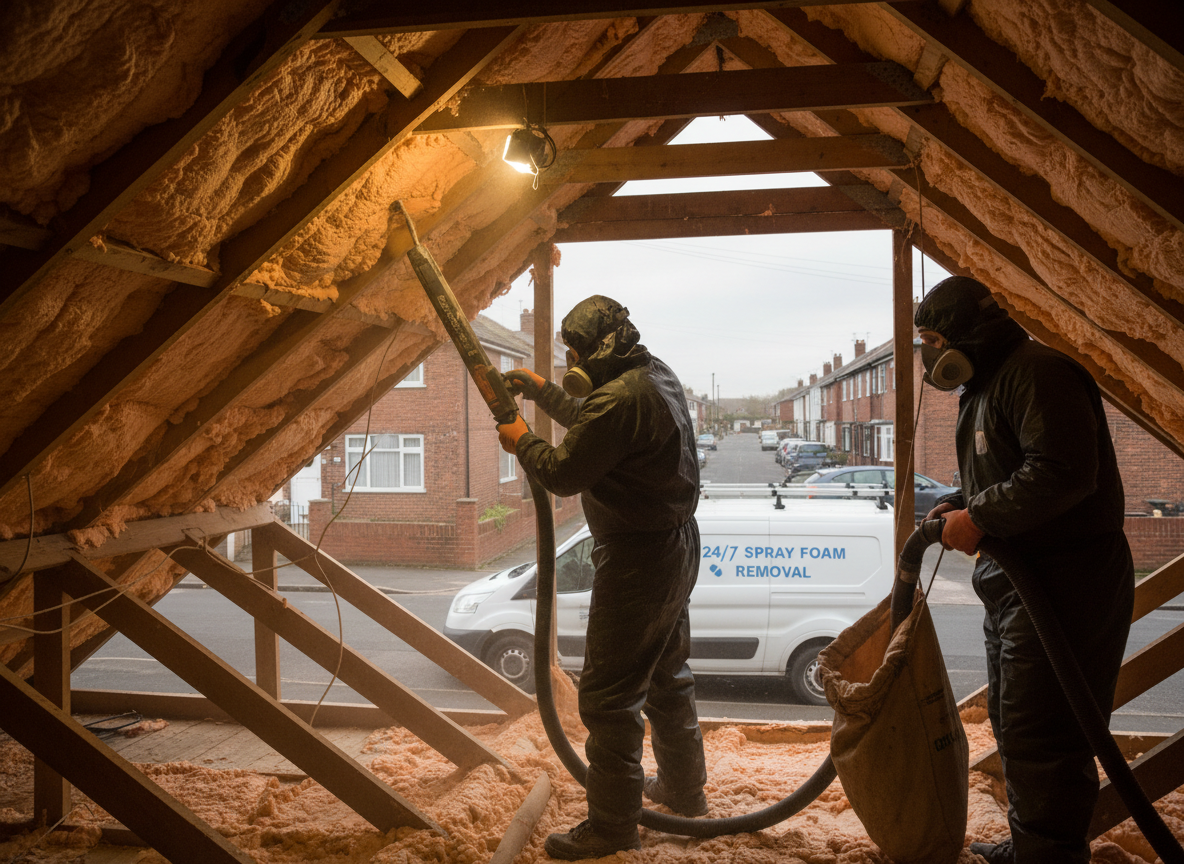
Spray foam installed in Scunthorpe lofts from the 1990s onward often traps moisture against rafters in properties along the A18 corridor and in Gunness. Removal requires cutting back the foam in sections while protecting original timber, electrical cables and ventilation gaps that many older Lincolnshire homes rely on. Night calls are common when homeowners discover damp patches or musty smells during winter.
Access in Scunthorpe terraces and semi-detached houses frequently involves narrow loft hatches and low eaves. Technicians must work around stored items and fragile ceilings without disturbing asbestos-containing materials common in pre-1980 builds near the steelworks. Full extraction includes vacuuming residue from joists to prevent re-adhesion and checking for hidden water ingress from the region’s frequent rain.
Disposal follows Environment Agency rules for expanding foam waste generated in the DN15 postcode area. Crews bag and remove all material the same night to avoid leaving debris that could affect neighbouring properties on tight streets. Post-removal inspection covers ventilation upgrades needed once the foam is gone, especially in homes where roof spaces were previously sealed.
Common Triggers for Emergency Calls
Homeowners in Scunthorpe often ring after noticing condensation on bedroom ceilings or when selling a property and the survey flags foam. The 24/7 service covers these situations directly from the Gunness base without waiting for office hours.
Technician insight
In Scunthorpe the thing that catches most people out with 24/7 Spray Foam Removal is the older roof timbers around Gunness and the A18 where previous owners tried to top up foam themselves, leaving hidden pockets against the felt that only show up once you start cutting.
Night call after ceiling stain in Gunness
Homeowner noticed a damp patch spreading across a bedroom ceiling in a 1970s semi off the A18. Inspection found spray foam bridging a small roof leak that had been sealed in. Crew removed the foam section, cleared residue from the rafters and left the space ventilated. The ceiling dried out without further intervention.
How it works
- 1
Initial Call and Access Planning
Technician takes details over the phone and confirms loft access points for the Scunthorpe or Gunness address.
- 2
On-Site Assessment
Crew inspects foam depth, timber condition and any electrical or pipework that runs through the treated area.
- 3
Sectional Removal
Foam is cut and peeled in controlled pieces, with dust extraction running continuously to protect the rest of the property.
- 4
Clearance and Final Check
All waste is removed, joists are brushed clean and the loft is left ventilated before the team leaves site.
Pricing
Upfront quote given after inspection; cost depends on foam thickness, access difficulty and amount of material to extract.