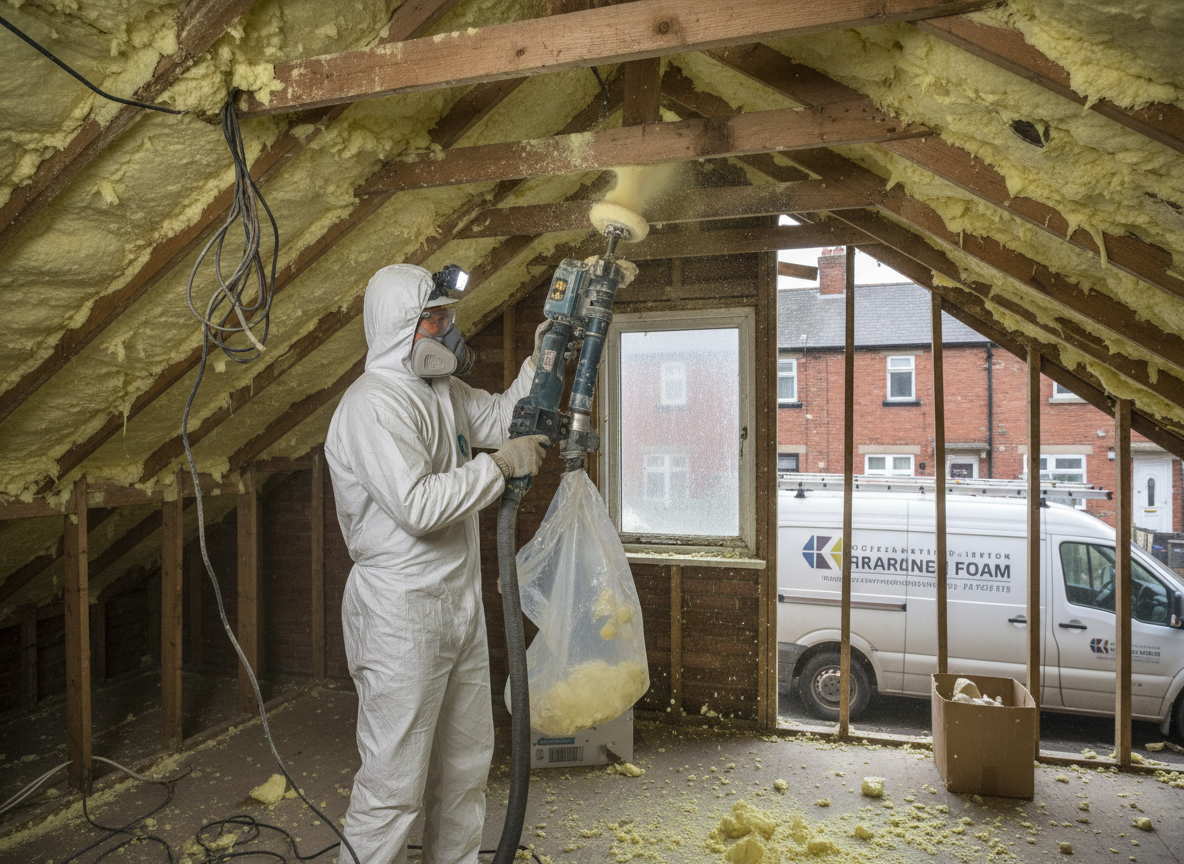
Older homes in Scunthorpe often feature timber roof structures from the 1930s to 1960s that were never designed for closed-cell polyurethane foam. When this foam is applied it bonds tightly to rafters and can trap moisture against the underside of tiles, especially during the damp winters common along the Humber. Removal requires careful mechanical scraping and vacuum extraction to avoid splitting aged battens or disturbing asbestos-containing soffits found in many Gunness and Crosby properties. Homeowners frequently discover the foam has expanded into electrical cables and pipework, creating hidden fire and leak risks that only become apparent once the material is cut away.
The process starts with a full loft inspection to map foam thickness and any underlying defects in the felt or ventilation. In Scunthorpe terraces the narrow access hatches and low eaves demand sectional dismantling rather than bulk pulling, which reduces dust spread into living spaces below. We separate the foam into manageable sections using oscillating tools before bagging it for licensed disposal, then clean residual residue from the timber so new insulation can be fitted without adhesion problems. Edge cases include foam that has wicked into brickwork at the gable ends, common on exposed properties facing the prevailing winds from the east.
Post-removal ventilation upgrades are often needed because original roof spaces in the DN15 postcode were built with minimal airflow. Blocking this with foam leads to condensation on the rafters during cold snaps. We check for rot at the wall plate and advise on adding ridge vents or eaves grilles suited to the local clay tile roofs. This step prevents repeat issues that homeowners in the area report after previous failed removal attempts by non-specialists.
Technician insight
In Scunthorpe the thing that catches most people out with Residential Spray Foam Removal is how the 1950s-60s post-war semis along the A18 corridor have very shallow roof voids. Foam fills every gap right down to the wall plate and once it gets wet from the frequent easterly rain it bonds even harder to the brickwork, so you end up doing far more hand work than the job first suggests.
Foam Removal in a Crosby Terrace
Homeowner in Crosby noticed black mould on bedroom ceilings after a wet winter. Inspection found closed-cell foam had blocked all eaves ventilation in the 1960s terrace. We cut the foam back in sections to avoid disturbing the original felt, extracted the residue and opened the vents again. The ceiling dried out within weeks and no further mould appeared.
How it works
- 1
Initial Loft Survey
We attend the Scunthorpe property to assess foam depth, timber condition and access constraints before any work begins.
- 2
Controlled Extraction
Foam is sectioned and removed using hand and power tools to protect roof timbers and services in older Lincolnshire homes.
- 3
Site Clean and Disposal
Residual material is vacuumed and all waste is bagged for proper off-site disposal from our Gunness base.
- 4
Final Inspection
Timber surfaces are checked and any ventilation recommendations are provided before handover.
Pricing
Upfront quotes issued after on-site inspection; final cost depends on foam depth, access and property age.