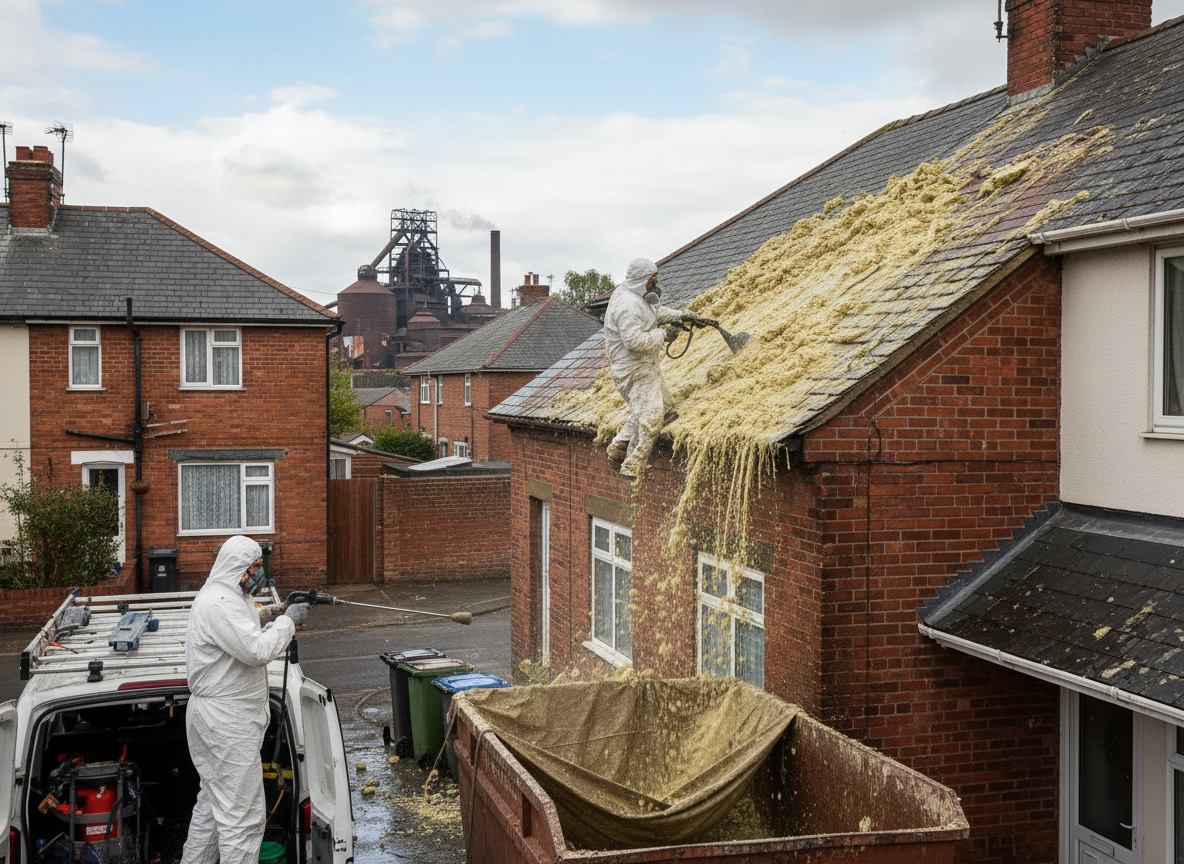
Roof spray foam in Scunthorpe homes often dates from the 1970s and 1980s when it was applied directly over felt in terraced and semi-detached properties common around Gunness and the A18. Over time the closed-cell material shrinks, cracks, and holds condensation against rafters, especially during the damp Lincolnshire winters when roof temperatures swing. Removal requires cutting the foam into manageable sections while protecting the original timber and underlay, then disposing of the waste in line with local landfill rules for construction materials.
Edge cases appear regularly in post-war builds where foam was sprayed over electrical cables or into the eaves without ventilation gaps. Cutting too close risks nicking wiring or dislodging ridge tiles, so we work from inside the loft with head torches and dust extraction rather than roof access unless the deck itself needs repair. Homeowners sometimes attempt DIY scraping which leaves residue that later prevents new insulation from bonding properly.
Regulation notes matter because Scunthorpe falls under North Lincolnshire building control. Any work that exposes the roof deck must leave the space ventilated to current standards, and we always advise checking whether the original foam was installed before or after the 2002 changes to Part L. We leave the loft clean enough for inspection and ready for conventional mineral wool or sheep's wool if the owner chooses to re-insulate.
Technician insight
In Scunthorpe, the thing that catches most people out with roof spray foam removal is how often 1960s semis along the A18 have the foam bonded straight onto the original felt without any breather membrane, so pulling it free can tear the felt and leave you needing extra roofing work you did not plan for.
Gunness Semi Loft Clearance
Homeowner in Gunness reported musty smells and sagging insulation. We found closed-cell foam had trapped moisture against the rafters and felt. We removed it in strips from the eaves inward, extracted the residue, and opened the ridge vents before leaving the space ready for new insulation.
How it works
- 1
Site Assessment
Inspect the loft from inside, check rafter condition, note any electrical or pipework runs, and measure foam depth.
- 2
Containment Setup
Seal the loft hatch and floor with plastic sheeting and negative air to keep dust out of living areas.
- 3
Sectioned Removal
Cut foam into strips, peel from the felt and timbers, bag waste immediately, and repeat until all material is gone.
- 4
Final Clean and Vent Check
Vacuum residue, inspect for remaining patches, confirm eaves and ridge ventilation paths are clear.
Pricing
Cost depends on loft size, foam thickness, and access difficulty; we provide an upfront quote after viewing the property.