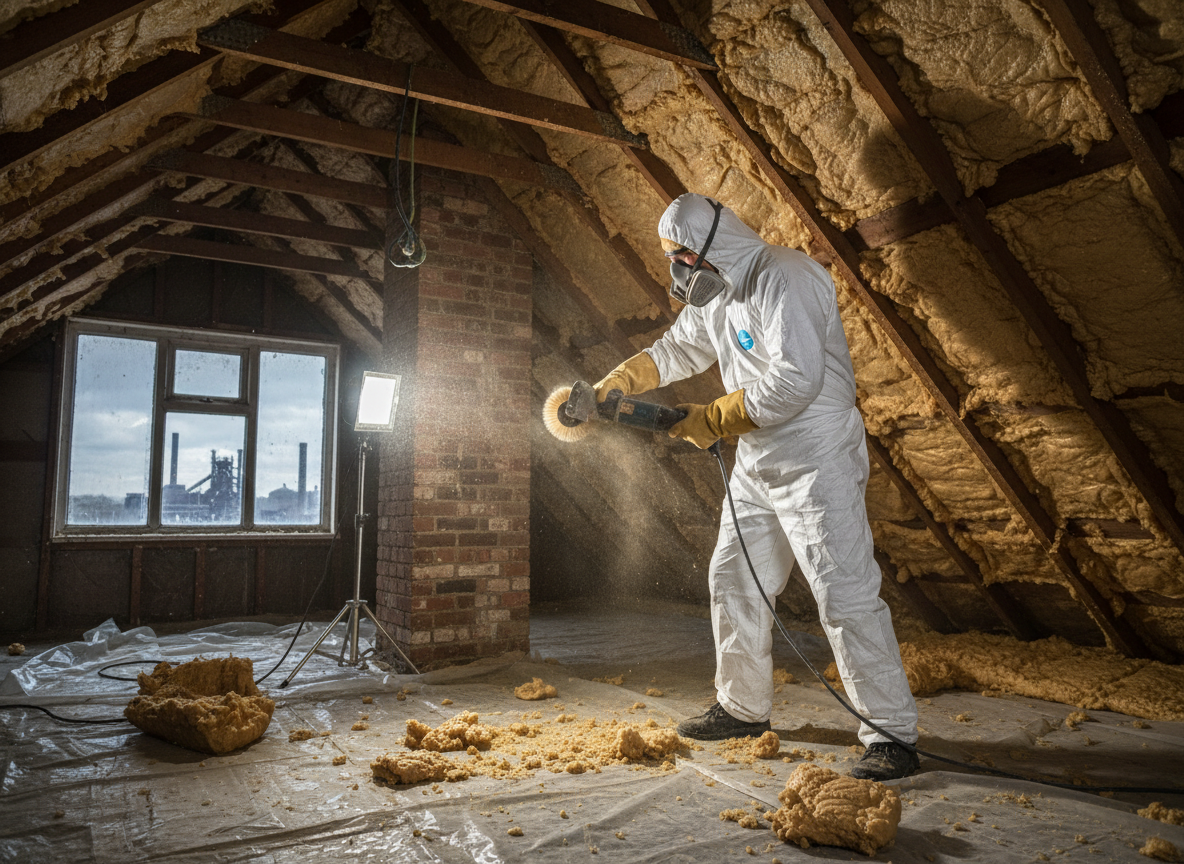
Closed cell spray foam bonds tightly to rafters and joists in Scunthorpe lofts, especially in 1960s and 1970s semis and terraces common along the A18 corridor. Removing it requires cutting the foam into manageable sections without damaging timber or releasing trapped moisture that can lead to rot once the insulation layer is gone. Gunness and nearby villages often see older roof voids with limited access hatches, forcing technicians to work in confined spaces while maintaining negative air pressure to contain dust.
Winter conditions in the Scunthorpe area bring frequent damp spells that make the foam more brittle and prone to crumbling during extraction. This increases the volume of waste that must be double-bagged and taken to licensed disposal points rather than left on site. Homeowners in areas like Crosby and Ashby frequently discover the foam has been applied over original mineral wool, creating mixed layers that demand separate handling to avoid cross-contamination.
Ventilation paths blocked by closed cell foam must be reinstated after removal to meet current building standards in Lincolnshire. Failure to reopen eaves and ridge vents can cause condensation problems once the loft returns to its original uninsulated state. Technicians check for hidden electrical cables and pipework before any cutting begins, as older Scunthorpe stock often has wiring routed directly through the foam.
Technician insight
In Scunthorpe, the thing that catches most people out with closed cell spray foam removal is how often the foam was sprayed straight over old mineral wool in post-war terraces along roads like Doncaster Road. Once you start pulling it out you find the original insulation has soaked up condensation for years, turning the job into a double waste stream that needs separate handling.
Crosby Terrace Loft
Homeowner in Crosby reported persistent damp smells after closed cell foam installation. Inspection found foam covering saturated mineral wool and blocked eaves. Crew removed both layers, cleaned joists, reopened ventilation, and restored airflow without disturbing the original roof structure.
How it works
- 1
Site Inspection
Assess loft access, foam thickness, and any hidden services from the A18 Doncaster Rd base before work begins.
- 2
Containment Setup
Install dust barriers and negative air machines to protect living spaces below in Scunthorpe terraces.
- 3
Foam Extraction
Cut and remove closed cell sections in controlled pieces, separating it from timber and any underlying insulation.
- 4
Waste Removal and Cleanup
Bag all material for licensed disposal and vacuum residual dust from rafters and floorboards.
- 5
Ventilation Restoration
Reopen eaves and install vents where needed to restore airflow in the Scunthorpe loft.
Pricing
Cost depends on loft size, foam depth, and access constraints. Upfront quotes provided after inspection.