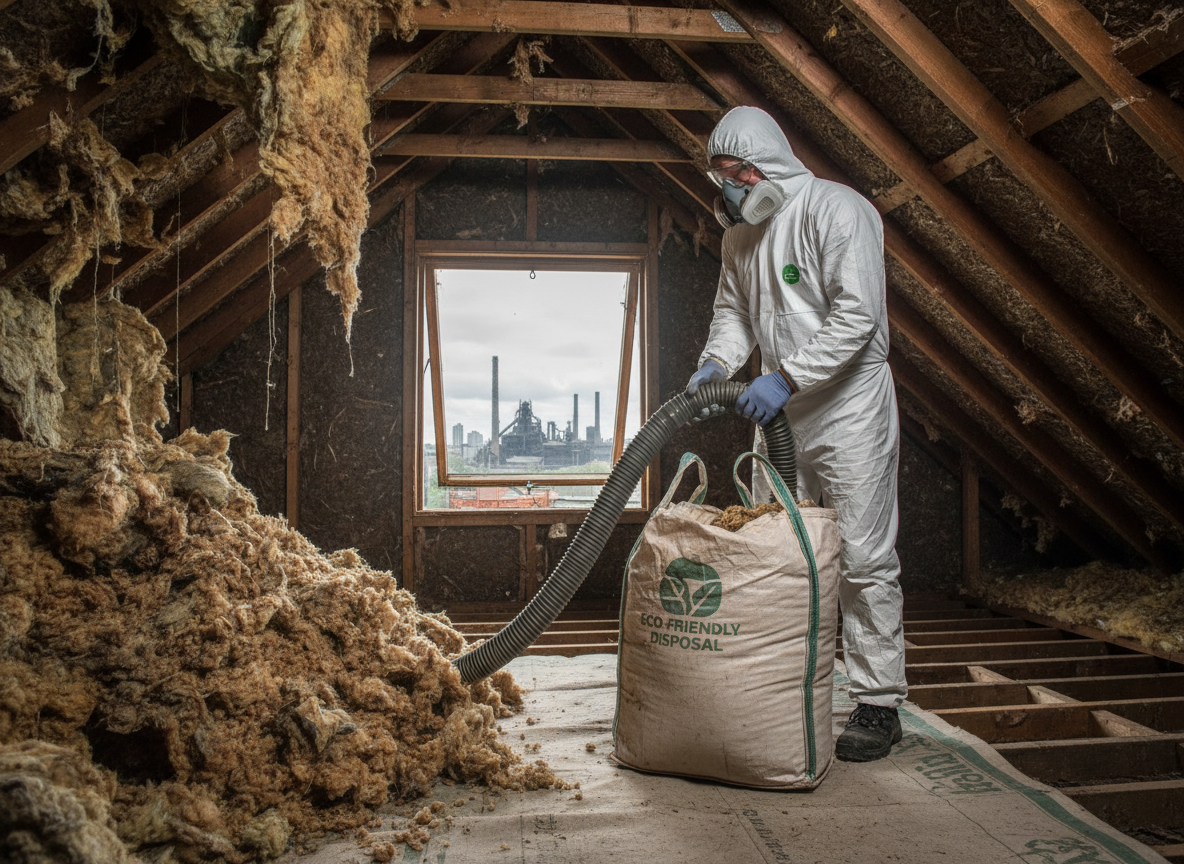
Scunthorpe's older terraced homes and post-war estates around Gunness and the A18 corridor often have spray foam applied directly to rafters in the 1990s and early 2000s. Removing it requires careful separation from timber and felt to avoid damaging the roof structure, especially when winter damp has already softened the wood. We bag and remove the material in sealed sections so none of the particles settle into the living spaces below.
The flat, exposed terrain around Scunthorpe means wind-driven rain can push moisture under the tiles and into the foam layer. This creates hidden pockets of mould that only appear once the foam is cut away. Our process includes checking every rafter bay and ventilating the loft immediately after removal so the timber can dry before any new insulation goes back in.
Disposal follows strict local rules for the Scunthorpe area. We separate the foam from any contaminated timber and take it to approved sites rather than mixing it with household waste. Homeowners on the outskirts near the A18 often have limited access for larger vehicles, so we stage the job over two visits when the lane or driveway is narrow.
Edge cases include foam that has bonded to electrical cables or pipework running through the loft. We isolate these first and work around them rather than pulling them free, which prevents later faults in the heating system common in DN15 properties.
Technician insight
In Scunthorpe, the thing that catches most people out with environmentally friendly insulation removal is how the flat, windy terrain around the A18 pushes rain under the tiles and traps moisture against the foam. Older estates near Gunness often have rafters that look sound until you start cutting, then you find soft spots that need attention before any new work can start.
Gunness Loft Foam Clearance
Homeowner in Gunness contacted us after noticing musty smells in the bedrooms below the loft. We found spray foam that had absorbed years of wind-driven rain through the tiles. The material was removed in sealed sections, the rafters checked and ventilated, and the space left clean and dry with no residue left in the property.
How it works
- 1
Initial Loft Inspection
We visit the property in Scunthorpe or Gunness to assess foam depth, access points and any timber damage before quoting.
- 2
Safe Material Separation
Foam is cut into manageable sections and bagged on site to stop particles drifting into the home below.
- 3
Timber and Cavity Check
Every rafter bay is inspected for mould or rot caused by trapped moisture from local weather patterns.
- 4
Sealed Removal and Disposal
Bags are carried out through external access where possible and taken to licensed facilities serving the Lincolnshire area.
- 5
Final Ventilation
Loft is ventilated immediately so timber can dry before any replacement insulation is considered.
Pricing
Upfront quotes based on loft size, access and how much foam has bonded to the structure.